Dear Friends,
In the Torah portion for this week, Vayishlach, Jacob wrestles
with a mysterious being before he confronts his brother Esau. Prior to this mysterious encounter we find
the following in Genesis 32;11:
קָטֹ֜נְתִּי מִכֹּ֤ל הַחֲסָדִים֙ וּמִכׇּל־הָ֣אֱמֶ֔ת אֲשֶׁ֥ר
עָשִׂ֖יתָ אֶת־עַבְדֶּ֑ךָ כִּ֣י בְמַקְלִ֗י עָבַ֙רְתִּי֙ אֶת־הַיַּרְדֵּ֣ן הַזֶּ֔ה
וְעַתָּ֥ה הָיִ֖יתִי לִשְׁנֵ֥י מַחֲנֽוֹת׃
I am
unworthy of all the kindness that You have so steadfastly shown Your servant:
with my staff alone I crossed this Jordan, and now I have become two camps.
As I think about the remarkable individuals that we have
encountered during the past two days, these words of Jacob take on a whole new
meaning. Like Jacob, many of feel us as though we are split in two as we try to
wrap our heads around the trauma that surrounds us. Those of us who have
watched the events unfolding in Israel and Gaza feel a sense of horror as we
learn about what happened on October 7th. Here in Israel, that horror is multiplied a
hundredfold as people experience it on a deeply personal level. Loved ones have
been murdered or kidnapped. The waiting for news is exhausting. No one is
unscathed – everyone is either related to or knows someone who has a connection
to a victim, a soldier, or a mourner.
At yet, despite the pain – or perhaps because of it, life
goes on in Israel. “Normalcy” is a relative term as over 150,000 refugees from
both the Gaza envelope and the North are being resettled in hotels, kibbutzim,
and temporary housing. But the beauty of Israeli society is also nremarkable. Even in the midst of grief, fear and anger, children
are going back to school. Babies are being born. Funerals are being held.
Businesses, while suffering, are opening their doors. People are doing all that
they can to create some semblance of routine. There is incredible beauty in
resiliency. At the same time, everyone
seems to be holding their breath as they wait for the next chapter of this
painful story to unfold.
On this second day of our mission, we met with many people
who were directly impacted by the war. Our first stop was Kibbutz Mishmar Ha
Emek in the Jezriel Valley. This kibbutz
has opened its doors to members of their sister Kibbutz, Nahal Oz which was
attacked on October 7th. We sat with several members of Nahal OZ and
heard their stories- some of which were triumphant, and others were tragic. For
this post, Some of you may have
heard about Tami (Tamar) Raanan. She is a member of Kibbutz Nahal Oz and her
daughter and granddaughter from the US had come to visit her in early October
in order to celebratI will not share the e her 85th birthday. Both her daughter and
granddaughter were kidnapped by the Hamas Terrorists. Due to the direct
involvement of President Biden, both of them were returned safely – weeks
before the current hostage and prisoner exchanges. Tami met with Biden and during
her meeting she told him: “I am happy that my children were released, but you must
do everything you can to release the rest - and I will help you.”
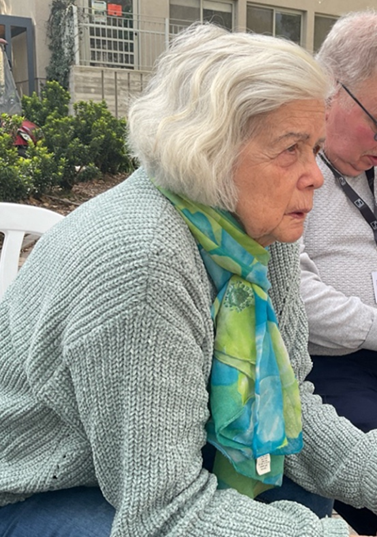
Tamar (Tami) Raanan
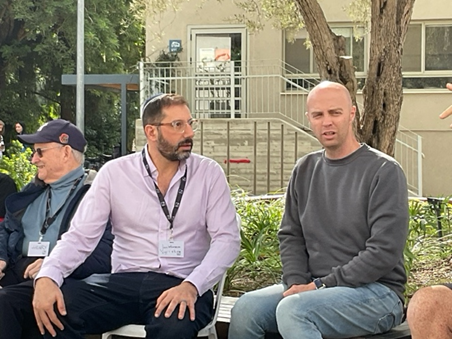
(Amir Tibon and Rabbi Josh Weinberg)
We also met with Amir Tibon - a reporter from HaAretz
newspaper who survived the attack hidden in a safe room with his wife and two
daughters – aged 1½ and 3. When it was clear that the IDF was not coming to
help, he called his father, a retired general who got into his jeep with his
wife and drove down from Tel Aviv to save them. Their remarkable story was
widely reported in the news – most recently on 60 minutes.
Amir had some harsh words for the Netanyahu
government who, he said, had abandoned his community. He told us that there was
an agreement into which all of the impacted communities had entered: They would serve as a first line of
protection on the border – they would raise their childrenband create a
meaningful life while the Government and IDF would ensure their protection. The
failure promptly respond to the worst attack on Jews since the Shoah meant
that, while Nahal Oz and its members kept their part of the agreement, the
government had not.
And
yet, while the government’s failures are widely known, one of the most
remarkable aspects of life in Israel today is how society instantly came
together to help those in need. Once again – we see the duality and resilience of
Israeli society. Within 24 hours of the attacks, individuals, communities and
groups from every side rallied to provide housing, clothing, food, counseling
services and economic aid to the refugees who fled with little more than the
clothes on their backs. Kibbutz Mishmar HaEmek literally tripled in size overnight
as it welcomed members from Nahal Oz. They were not alone. Among the organizers of the aid
were those, who just a few weeks earlier, had been coordinating the massive
protests against the government. The NGO’s and volunteers who had created a
remarkably effective system of protest, now rallied to provide vital services
to those in need. They were able to do what the government could not. Not one
government minister has come to visit, offer assistance or even check in with
the refugees from the Gaza envelope.
At Mishmar Ha Emek we also met with several Israeli Reform
rabbis who serve regional councils – traveling from kibbutz to kibbutz, village
to village. Theirs is a rabbinate of personal connection. They have no physical buildings, but they
have been able to sit at the sides of their congregants – giving them a
shoulder upon which to cry, a prayer to recite, a hug or a soft touch. They
understand and embody the importance of being a calm, sacred presence.
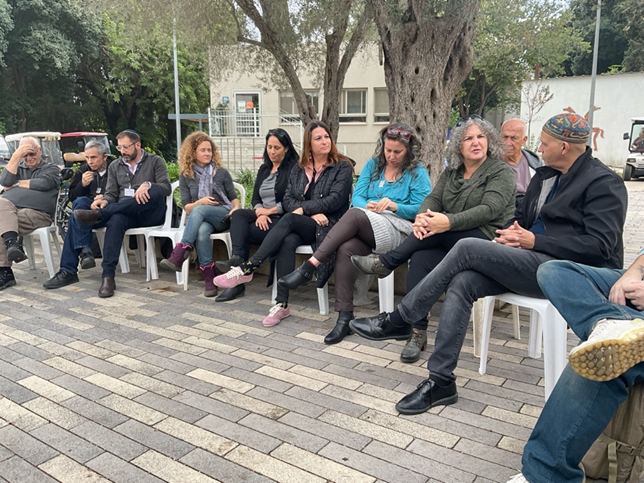
(Israeli Reform Rabbis)
From the Jezriel Valley, we journeyed north to Haifa to meet
with students and faculty of the Leo Baeck school. A pillar of Reform Judaism
in Israel where (as an aside I studied for 4 months in 1975 when I was an
exchange student in Israel during my Junior year), Leo Baeck is a remarkable
institution. It prides itself in serving Jewish, Christian and Arab
communities. Students at Leo Baeck shared with us how they volunteered in the
community and helped to assimilate refugees from both the North and south. We
met with Arab teachers and students, and learned first-hand how high school
students volunteered in the community to help gather supplies for soldiers and
welcome refugees into their midst.
We
ended our very long day at Congregation Or Chadash in Haifa. This is one of the oldest and most successful
Reform Congregations in Israel. Their
rabbis, Na'ama Dafni-Kellen,
and Gabby Dagan
shared how their community rallied the day after the attack to prepare
supplies, offer counseling services, raise funds and deliver collections to
soldiers, refugees and individuals affected physically, emotionally and
spiritually by the war.
(Rabbis Na'ama Dafni-Kellen, and Gabby Dagan )
This is only a small taste of a very long and powerful
day. Tomorrow we go to the Knesset and
then to Tel Aviv where we will join with groups of the families of those who
are still being held as hostages by Hamas.
Together we will pray, cry and call out to God for their release.
Shalom From Jerusalem!
Rabbi Joseph R. Black


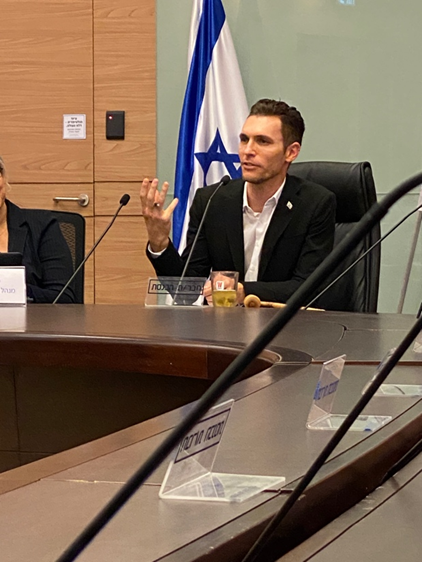


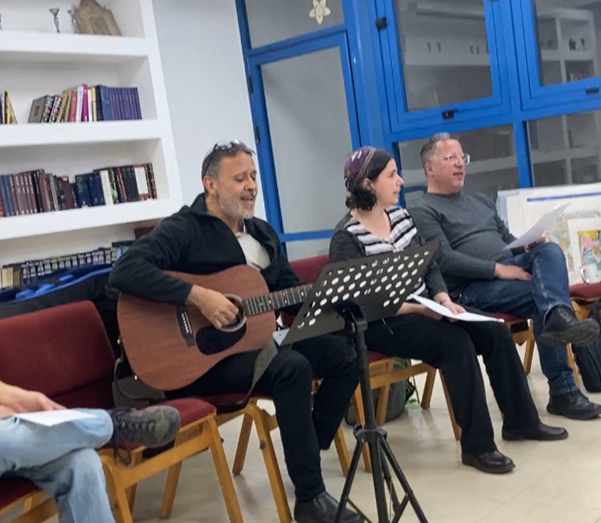

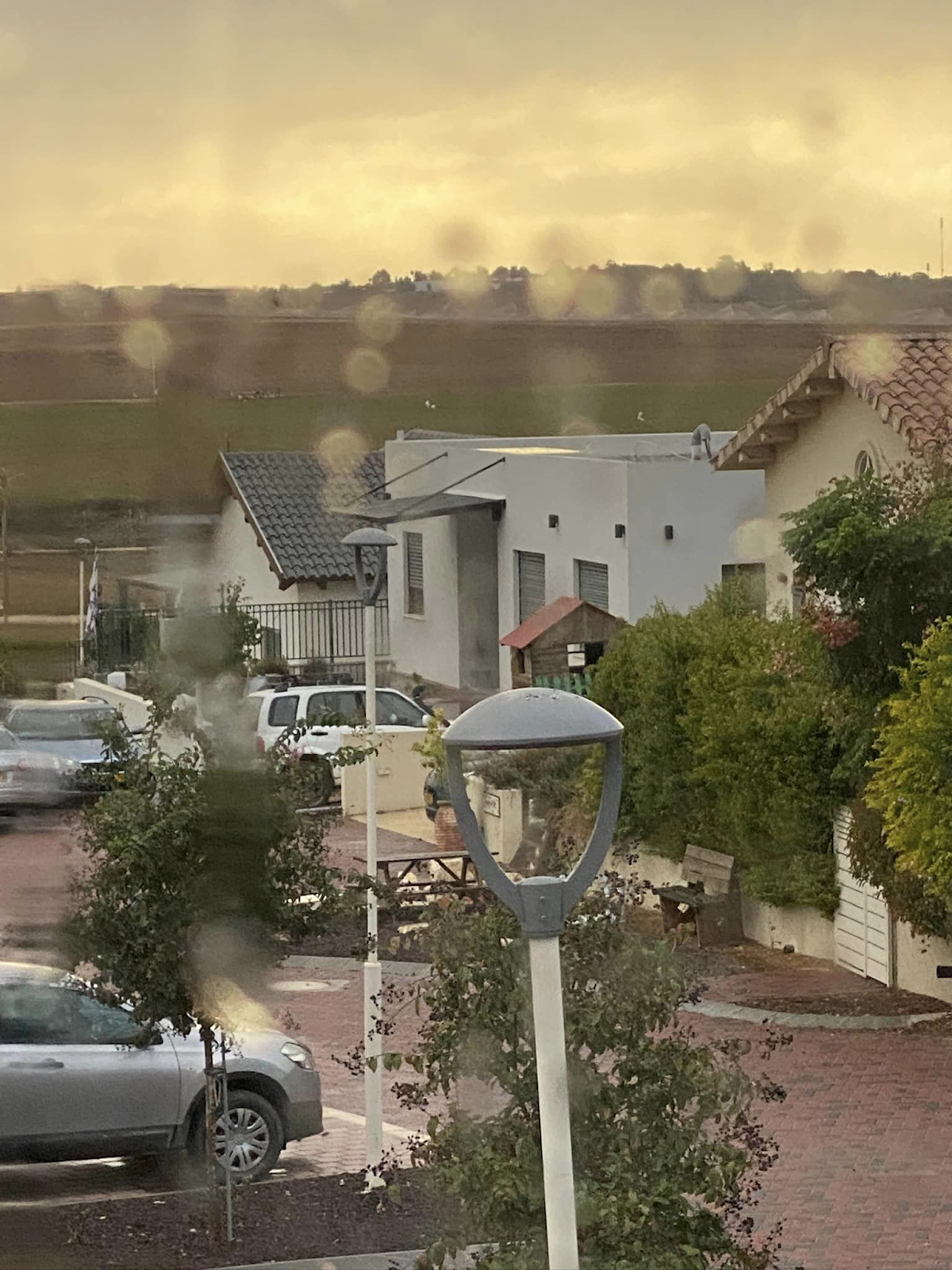
 (At Kibbutz Dorot)